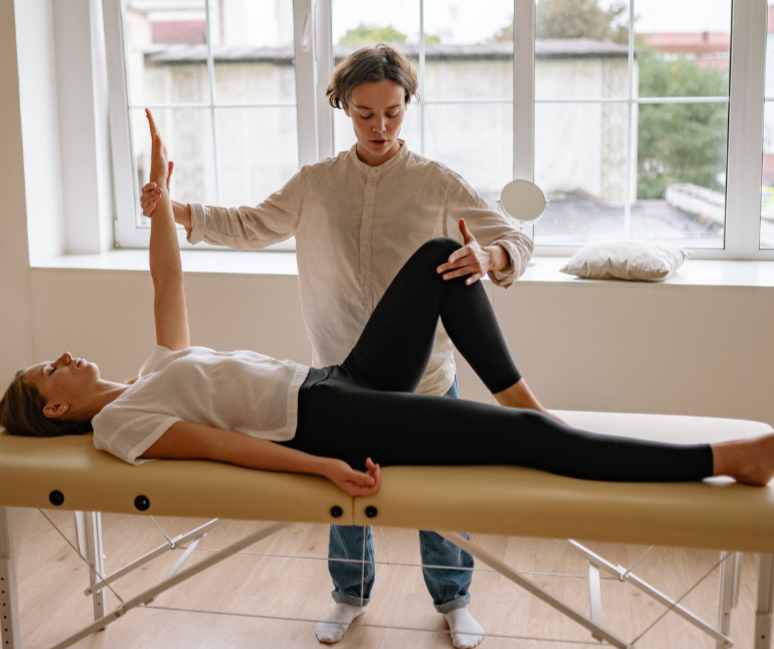
My first physical therapy job out of college was at St. Francis Hospital in Hartford, CT in 1996. I remember that one of my mentors there had been a PT for five years. She was awesome with both clinical and people skills, and I learned so much from her. I was in awe of her experience — she had already been a PT for five years.
What an awakening now, as this May will mark 30 years as a physical therapist for me! In many ways, I have landed exactly where I thought I would, and in many ways, not at all. I always wanted to settle down in Maine (achieved!) and develop deep career knowledge as well as a specialty in prenatal and postpartum PT (also achieved and ongoing!)
The spark to become a PT who worked specifically with pregnant women started in a physiology of exercise class. In one particular lecture, the professor really highlighted the mystery and wonder of “how do women’s bodies create life?” We build another human, and somehow we generally all come out okay. The complexity of building all of our systems in utero and still coming out with two eyes, a nose, and a mouth, not to mention fully functioning body systems, is awe-inspiring. What I imagined from that lecture was that working with pregnant women would have the reward of educating women about their bodies at a time when they are most curious and receptive. They learn ways to be healthier, not just during pregnancy, but beyond as well.
This has definitely been the case, and it is a privilege to work through this big life and body change with patients.
After working with pregnant and postpartum women for a number of years, it became clear that other women’s health issues had gone underrecognized and undertreated. This led me down a path of continuing education to treat pelvic health issues, which was certainly not where I thought I would land! So, over the past 25 years, I have deepened my knowledge in the area of pelvic health and can treat women more comprehensively. It has been amazing to see how this specific area of treatment has evolved over 25 years and the impact it has had on countless lives. Truly a long view that I appreciate.
Yet, I still really love treating patients from other populations as well. It keeps my other skills sharp and my days very interesting. Patients with low back pain, after shoulder surgery, tennis elbow, you name it, keep me curious. No two patients are the same, even if they have the same diagnosis. It also keeps me connected to my colleagues as we share information, learn new techniques, and collaborate.
This was unexpected. I thought I would take a deep dive into women’s health and leave some more traditional outpatient PT behind. This is something that has changed over 30 years. PTs can now become highly specialized in their chosen area of expertise. I think this has advanced the care we can provide in many ways, but sometimes it has also limited it. Being hyper-focused on one area of a patient or their diagnosis can lead to missing something; a “missing the forest for the trees” scenario. After all, we are one human, and all of that is connected in multiple ways (fascia, hormones, the circulatory system, to name a few). I love that I have had experiences where I was encouraged to hold onto a broad view while also doing a deeper dive into an area I am passionate about.
Thirty years ago, I did not expect to co-own a practice with my husband. We did not see that coming! We have seen healthcare change significantly in that time. Strategically, we are better at diagnosis and treatment, but there is also higher burnout and pressure in more current, traditional practices. I feel fortunate to have this practice. It may seem dated to some, but for me and my colleagues, it represents the standard of care that we like to give, and also hope to receive when we need care.
We are exclusively one-on-one with patients, have private treatment rooms, and schedules that ensure we have time to collaborate with each other (very satisfying!) and avoid burnout. I am proud that we have been able to keep this model of care. Some things have changed in 30 years, but this has not.
After 30 years, I encourage everyone I meet to seek out a quality healthcare practice that prioritizes spending time with you, truly knowing youm not just the diagnosis being treated, and that promotes collaboration, because two, three, or four heads are always better than one.